A supplier delay, transport exception, or changing customer commitment rarely stays inside one department. Connect the decision to the dependencies across the business.
One exception. More than one team.
Explore how a supplier delay connects procurement, inventory, fulfillment, and customer commitments in the same investigation.
Interactive example · Synthetic data
On schedule48 hours late
Alternate-route assumption: recover 8 hours. This is an example input, not a carrier quote or a recommended action.
Follow the dependency.
Select a stage to inspect
Available inventory
Stock coverage is 30 hours in this example. Compare that buffer with the selected response’s 27-hour delay.
Selected arrival delay27h
Stock coverage30h
Within modeled coverageNo gap under these assumptions—not a guarantee of delivery.
What evidence would support this decision?
Initiating source
Supplier update + purchase order
Relationships to validate
Supplier → component → inventory → order
Decision owner
Supply-chain planner
Each record needs a source, timestamp, relationship, and known uncertainty. A stale or missing record is a reason to investigate, not silently assume.
What needs to happen before taking action?
Investigate a transfer from another stocking location. Confirm usable stock, transfer capacity, and the commitments at the source location. A responsible person must approve any real operational change. This demonstration never books, reroutes, or executes anything.
Maritime is the initial beta focus. Other environments illustrate potential applications. All numbers and relationships here are invented for explanation; no live systems are connected.
The handoff is where context disappears.
Planning, procurement, logistics, and customer teams often see different versions of the same event. Our direction is a shared operating model that connects those records without pretending every source is equally current or complete.
Enterprise use cases.
Supply continuity
Trace a delayed component through inventory, production dependencies, and customer commitments. Identify which assumptions need confirmation before a response is selected.
Exception coordination
Bring the source event, exposed entities, investigation, and decision rationale into one workflow so teams can discuss the same operational question.
Response comparison
Explore rerouting, expediting, or maintaining the current plan against explicit constraints. Illustrative estimates remain separate from approved execution.
Start with the data and the decision.
Relevant inputs may include shipment records, supplier relationships, facility inventory, transport events, and order commitments. Data access and integrations must be scoped and agreed for each evaluation.
These use cases describe potential applications. Maritime exception intelligence is our initial beta focus. Scope and availability are confirmed individually.
Choose one recurring exception, the entities it touches, and the person accountable for the response. Agree what a useful investigation should explain.
Evidence and access
Identify permitted records, their owners, update intervals, and missing relationships. Security, retention, and integration requirements must be agreed before connecting a real source.
An operator-led review
Work through representative cases with the team that understands the operation. Test whether the explanation is traceable, the assumptions are visible, and the comparison supports a real decision.
A clear boundary
The website examples are simulations. They do not connect to your systems or execute changes. Availability and a proposed evaluation are discussed individually.
One exception. More than one team.
Enterprise exploration · Synthetic operating records
Illustrative relationships, not live telemetry, customer results, or an automated operational action.
Explore the operating question.
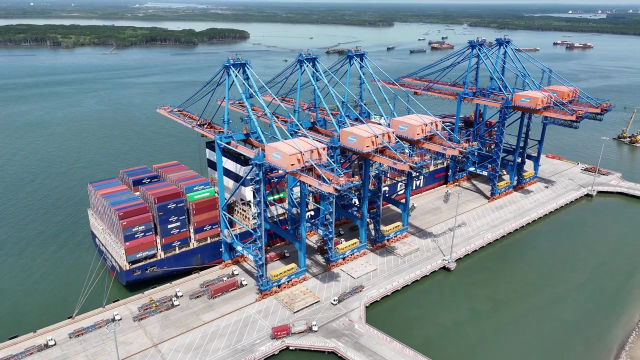
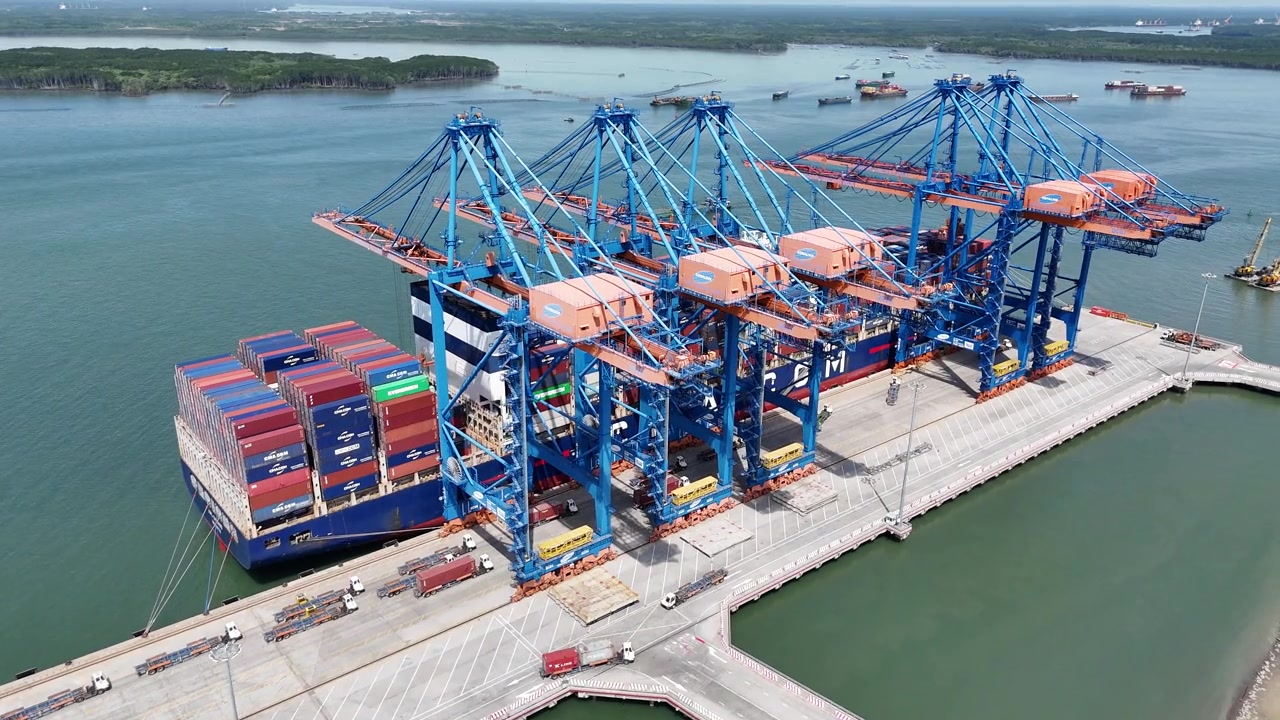
Real source footage · Illustrative use case, not a customer deployment
A common event crosses organizational boundaries.
A useful model joins the changing situation to the records, dependencies, and people needed to understand it.
Evidence
Supplier, order, and transport records
Relationships
Procurement → logistics → operations
Review
Agree which record is authoritative and who owns the response.
What would an evaluation need?
A bounded network, permitted source records, an agreed decision owner, and representative exceptions. Our first beta focus is maritime; other environments remain areas for exploration.
Bring your most consequential exception.
See how Prospicium connects operational change to the decision that follows.